
Sobbed, Lord Who Observe: Performativity and Cultural Spectatorship
A playful and naive afternoon in the late 2000s, I grabbed a mini-sized football that was intended as a government souvenir my family acquired from a bureaucratic fun fair, and started kicking it around the 3-bedroom apartment that housed 7 people. The grownups really hated that, so I played when no one was watching. Following the powerful kick that used 2% more muscle power from a jumpy kid, comes the fearful sound of disrupted gods- the tower that holds the offering of incense ashes, highly-concentrated alcohol and fruits was knocked over. Staring at the scattered ashes on the floor, a spike of anxiety fills the barely developed brain of kiddie Marco. Alerted by the unusual noise, mum paced over, not with an angry tone but a sense of urgency ‘Stop playing and come apologise.’. Not to the hardworking woman who was cleaning up the mess, but the smiling statue that was supposed to guard the land that our family inhabits. I was not a Buddhist, and neither was my mum.
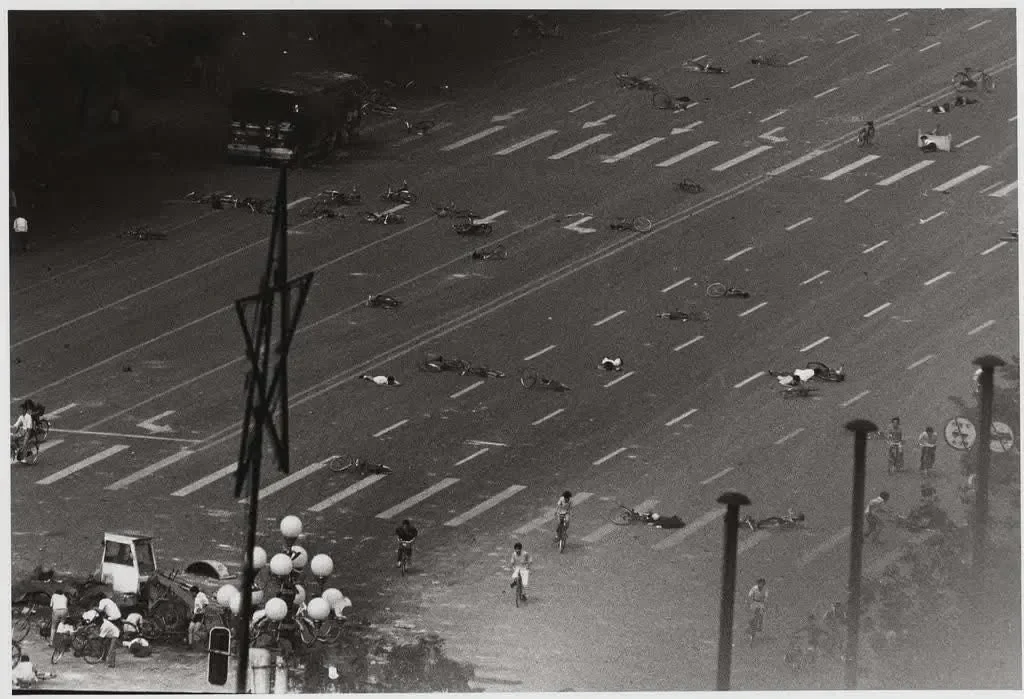
‘Lord Who Observe’ narrated a direct reference to the Buddhist deity Avalokiteśvara (meaning the Lord who looks down or the Lord who spectates the human world). First half of the exhibition (16–17th March 2026) showcases short film ‘Unwritten Embrace Falling Tree Fallen Free (2024–2026)’, digital collage ‘Ugly Handwriting: I Love You (2026)’ , and oil painting ‘The Physical Impossibility of Scent in the Mind of Someone Within. And on the 19th March, a live happening was performed in the same space, a 6-hour piece that holds the same name as the show’s title- ‘Sobbed, Lord Who Observe’. This publication covers some of the contextual references associated with the artworks within the exhibited realm, and briefly discusses the themes around language and cultural identity, spectatorship, and performativity in religious traditions.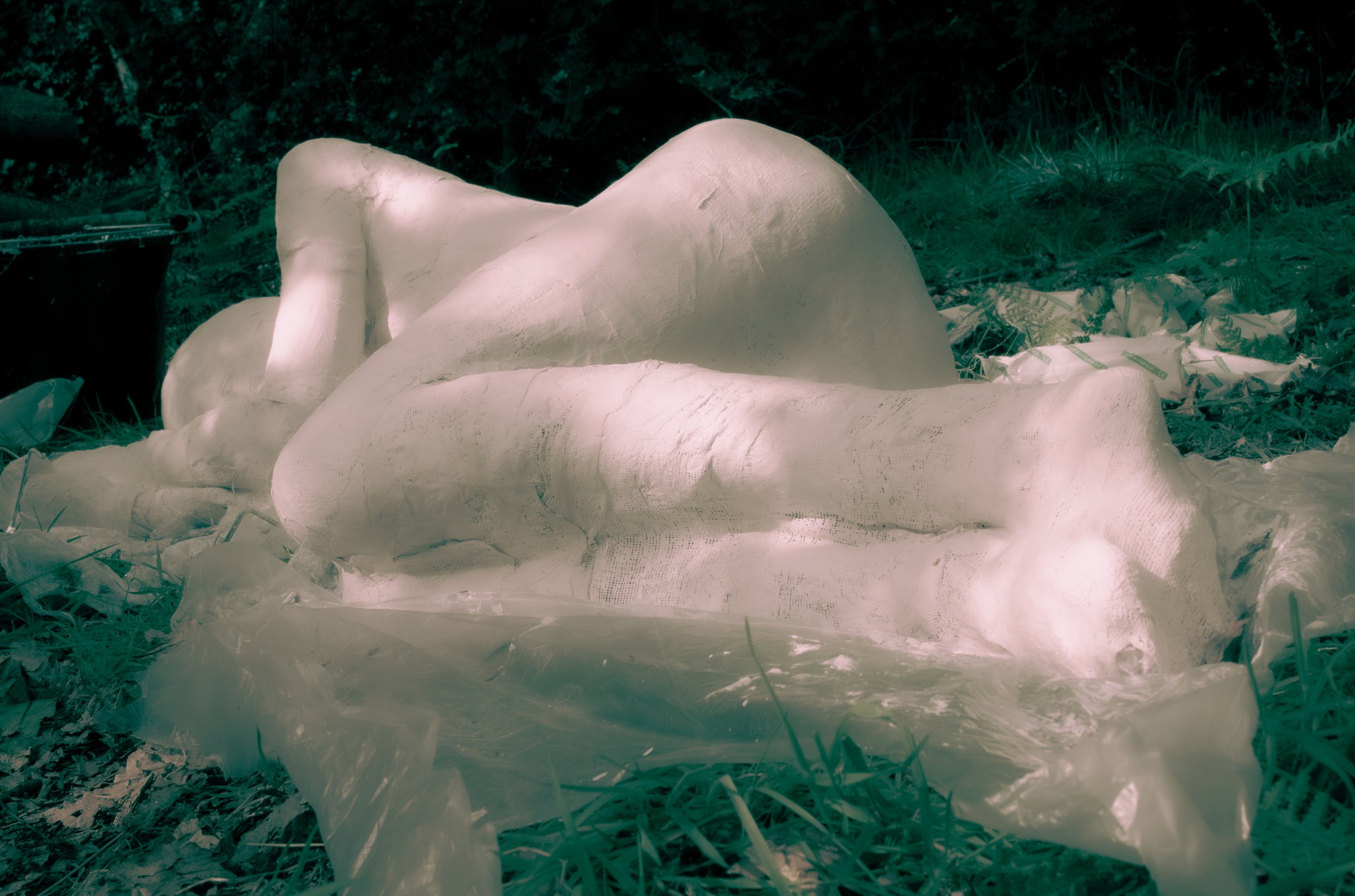
Marco Yuen, Unwritten Embrace Falling Tree Fallen Free (2024–2026)Keywords (or tldr if you may): Stillness, violence, audience participation, spectatorship, loneliness, performativity in documentationPerformance Unwritten Embrace Falling Tree Fallen Free (2024–2026) took place in the middle of a forest in Norwich amidst the windy spring of 2024. Three other performers were invited to be a part of this project, two of whom took on the role of encasing me in plaster, while all of them spent the five-hour duration documenting the piece and its surroundings in forms of photographs, videos, audio recordings, written words and illustrations which were later reviewed, edited and combined into a nine-minute long short film.When does a performance become a performance? Is it when the proposal stated the nature of the work before it was brought to reality? Is it when the act itself consists of movements and props that were crafted to deliver the artist’s artistic vision, that would not have been successfully communicated through other forms of media? Or is it when the choreography happens on a stage where audience participation is expected? There was an absence in the presence of spectators in Unwritten Embrace, only four informed performers and freshly-bloomed leaves on ruffling trees. This piece opened a new door for me, of realising the essence of performativity in virtually anything, and the disassociation between the act and its documentation. Since there was no one watching, this performance was done simply for the sake of ‘being art’ and nothing else, myself as the vessel of meditated creativity, creation of art in the minds of bringing non-matters into the tangible field. A tree fell in the middle of a forest that didn’t make a sound, did in fact fall, a part of the ecosystem collapsed, and home to squirrels and birds no longer stands, even though no one witnessed its downfall.There was a period of severe depression in my teenage years, which I physically locked myself up in a room for weeks, the only comfortable way I had in my repressed brain to converse with my family was through simple words that could barely form a comprehensive sentence. My mental outbreak was rather, silent. No wall-crumbling cries or violent destructions, but instead unending sobs and darkened heartaches. There is violence and chaos within the peace of stillness, a sense of chaos and discomfort among the acts of nurturing and care. The intense emotions of loneliness and the helplessness of an unsounded shout were embodied in this performance, while the world kept on running without my active perception. Did I create this piece, or did the world allow this piece to come into its existence?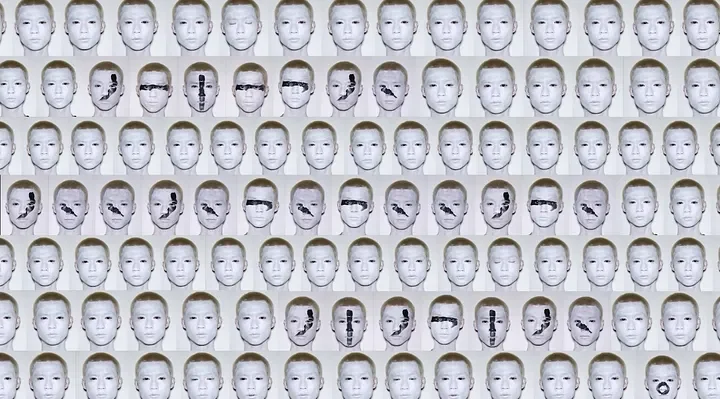
Marco Yuen, Ugly Handwriting: I Love You (2026)Keywords: Language, cultural identity
There is a weird rule about Chinese handwriting that every student has to follow, not strictly, but frowned upon when you don’t: you have to follow the universal stroke order when writing every single word. I absolutely hated that I had to follow such petty and robotic rules since I was a young child, so I never did. And as smartphones became the main communication device for everyone, adults are now forced to relearn the stroke orders for words in order to use the stroke keyboard to type Chinese words.
There is no doubt that a lot of HongKong-British diaspora share one specific culture shock, which is that British people are so much more affectionate. I know I know, what a ridiculous thing to hear when you were born in this country, but for a country that doesn’t expect thankyous, a place where you can live with the same neighbour but remain uninformed of their first name, a culture where saying ‘how are you’ to strangers is considered creepy and unnecessary, the widely-spoken cliches in British culture come across as extremely tender and compassionate.
There are just some things that you will never hear a Chinese (or at least Cantonese, to my knowledge) person say. As much as it is a depressing thing to admit, It is very rare to hear ‘I am proud of you’ from your teachers, nor ‘I love you’ from parents. At a point where I imagine the phrase ‘I love you (我愛你)’ is texted out more than it is spoken out loud in Cantonese culture.
Learn about Medium’s values
I pose myself as the paper and the ink, amplifying the saddening nature of language and cultural barrier between Chinese and English, under the lens of someone who doesn’t know whether he thinks in either of the languages, the he who can speak his mind louder in a foreign language.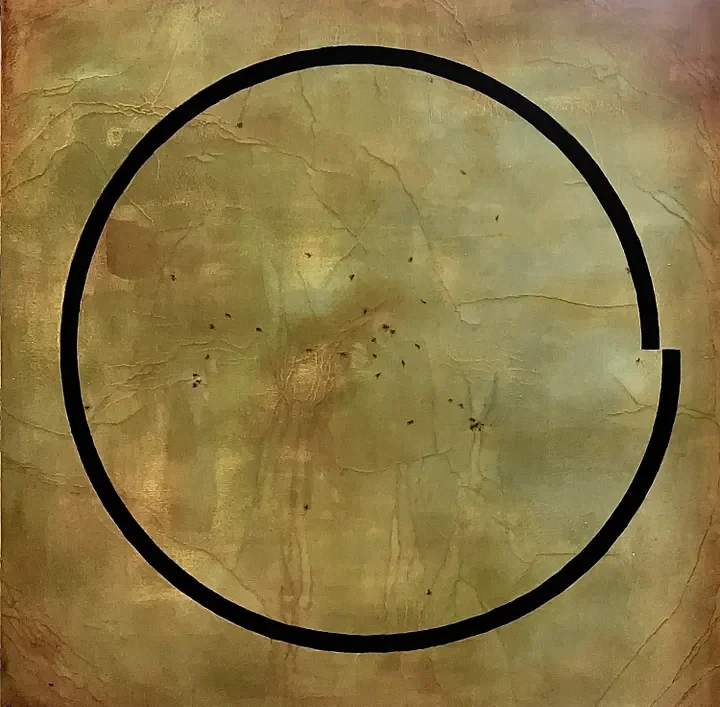
Marco Yuen, The Physical Impossibility of Scent in the Mind of Someone Within (2026)Keywords: Imaginary boundary, spectatorship, empathy, social commentary, immigration
Whether you’ve done it yourself or you’ve seen a video of someone doing it, we know that when you draw a circle around an ant or a spider, they completely lose the ability to recognise the fact that they are not physically trapped. Ants have poor vision and they rely on pheromone scent trails to locate resources or make their way back to the colony. By drawing a circle in the dirt or an ink boundary around them, it disrupts the ants’ directional orientation, making it virtually impossible for the little creatures to seek ways of moving onwards. We chuckle at the simple minds that fail to cross over the intangible boundary. In the meantime, people are separated by imaginary borders so-called ‘nations’, the ongoing debate within countries of policies about ‘illegal immigrants’, seemingly drawing a disassociation between natural human rights and the legality of immigration status.
It is an utterly irresponsible, apathetic phrase to say aloud- if I were you, one is speculating someone else’s life from an outsider’s perspective, a simple thought of the god-given ability to make different choices without the mature understanding of one’s upbringing, influences and education. ‘If I were Donald Trump, I wouldn’t start the war with Iran, I would’ve focused on the living quality of Americans.’ The irony is, if you were brought up in his wealthy background, privileged education and the out-of-touch upper-class social circle, you would most likely be the exact same type of wannabe dictator as him, if not worse. Economic status limits the perimetre of one’s imagination; the working class simply cannot comprehend the rationale behind the process of authoritarian decision-making.
I was lucky enough to escape from the collapsing state of Hong Kong and pursue my artistic development in England, but for many people (in Hong Kong), it is almost like a fairy tale to fathom about leaving their roots, mostly because of financial restrictions, with a minimum wage of less than 4 British pounds it is hard to imagine a life outside the basis of survival, when people struggle to even own the house they live in (crowning to be the one city with highest average property price, around 30% of the population rents their homes instead of thinking about buying a property). For those who are fortunate enough to lift the courage to abandon the life they built and move to a foreign country, we had to relearn a new language, adapt to a new culinary culture, make new social circles and accept the fact that on a random Friday evening you would have to endure racial slurs shouted at you by a drunk on a busy road. How many people are comfortable with making these life changes? There is also a shameful trend among some ‘patriotic’ HongKongers having a derogatory attitude towards people who chose to leave their home soil, but aren’t we all just trying our hardest to live the best lives we can?
Ants can't jump, and physicians often use ants as the example to depict the difference between two-dimensional and three-dimensional worlds (that poor ant that got placed on the Möbius strip). I made this connection of ants being illustrated on a canvas, while the person who is looking at this painting, is constantly being trapped in this imaginary border. Now who is the silly one?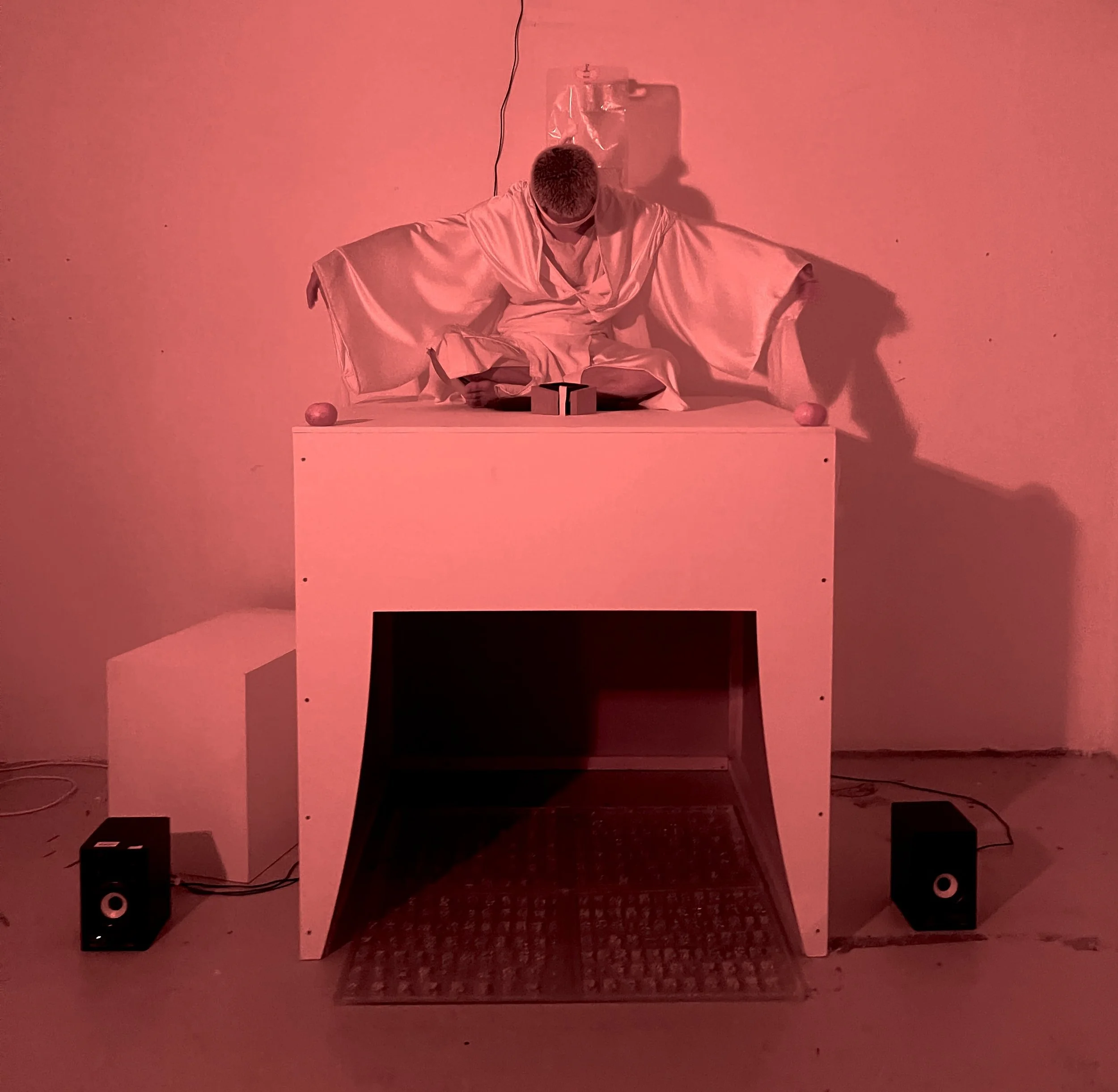
Marco Yuen, Sobbed, Lord Who Observe (2026)At the start of this publication, I recalled one of my more vivid memories about my childhood’s connection with Buddhist beliefs, this fearful respect towards gods that we sort of believe in.
Avalokiteśvara (觀世音菩薩) is this immortal deity that understands all human emotions, who has deep empathy towards the pains and sufferings that mankind goes through. One of the most widely-spoken prayers in Buddhism, the Heart Sutra, is believed to have been passed down to the disciple of Shakyamuni Buddha, Shariputra. The prayer delivers the central idea of Buddhism: everything is ‘One’, nothing is something and something is nothing. And to alleviate the suffering of humanity, one must listen to the teachings of the immortals, abandon all superficial desires, sensories from the physical body, and the humanoid thoughts In the mortal brain. The prayer ends with a spell spoken in Sanskrit, it goes 'Go ahead, go ahead. Go ahead to the other shore. Everyone, go ahead to the other shore. Everyone be awakened and reach enlightenment.’ It is a refusal to the concept of reincarnation, because as long as one remains in the human form, there shall be inevitable suffering, and the only way to escape from the suffering is to abandon the tangible realm, and let your soul ascend to the formless Nirvana.
It is at times difficult for me to call myself an atheist, because I believe that there is a higher life form that holds superior power over mankind. And my stance on religion has always been, ‘as long as it is not superimposing in nature, and it brings comfort to the disturbed, I’m fine with it, I will happily live with people who acknowledge their insignificance.’ But the hypocrisy comes, there is no way of achieving total peace in our mortal bodies as long as we are alive, according to Buddhist teachings, wars go on, the poor get poorer, the starved have their hopes ripped, the uneased continue to live on with fear growing progressively every day. What is the reason for saying prayers when your Messiah did not promise you an ending? I understand the cynical nature of this thought, but you cannot argue that it is not reasonable. Growing up in a household that accommodates statues of Buddhist gods, I have every reason to question the tradition of blindly believing in an icon, when it brought me fear far more than comfort.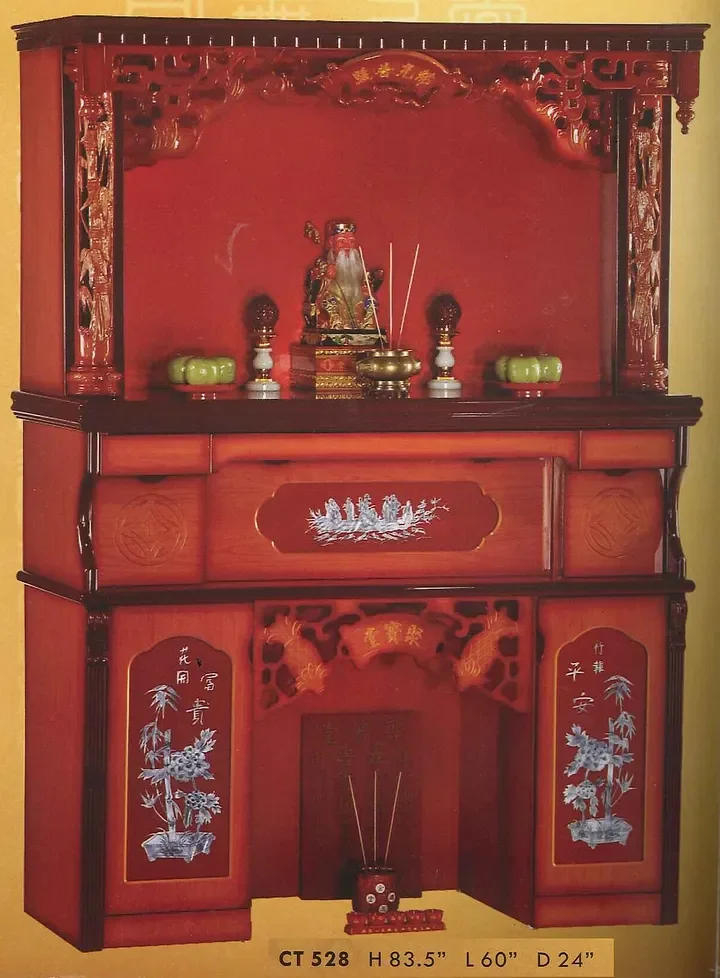
A classical shrine to house Buddhist gods or deities from traditional religious beliefsThe romanticised behaviour of putting religious gestures before personal benefits is common in Asian cultures. No matter how small your house is (more likely to be a small apartment in Hong Kong’s horrendous housing situation), if you are living with a family member of the older generations, you are very likely to share the same crowded living space with a dark red, typically wooden shrine of many ornaments. And no matter how poor you are, you will find the money to buy and offer incense and fresh fruits to the immovable. During big holidays like the Mid-Autumn Festival, we even make a whole chicken as a sacrificial honour to the gods that protected us throughout the year.
A lot of the deities that take our offerings are not even actual figures from religious booklets, but instead high beings from folklore that people were told to devote their lives to. You shouldn’t step on the sill of a door because that would upset the god that guards it; you should always say ‘excuse me’ when you pee in a bush because the god of land might be there; you do not point your fingers at the moon because it is disrespectful to the immortals that inhabit there, otherwise your ears will be cut off. These cultural traditions thrive on fear-mongering, and passed on from generation to generation, to a point where no one really understands why we have to follow rules made up by gods we don't necessarily believe in.
Avalokiteśvara nobly gave humanity this sutra that supposedly saves us from eternal suffering, they (Avalokiteśvar was depicted as both female and male, and they hold the holy ability to transform into 33 different identities of all genders and all ages) know what atrocities human has to go through, and the only way we get to understand this sympathetic gesture is by saying the holy language.In a world where nothing makes any human sense, is it that absurd for people to stop believing in prayers?
‘Sobbed, Lord Who Observe’, Marco Yuen solo exhibition, Norwich University of the Arts, St. Georges Building, Project Space 5, 16–20 March 2026.