
8861.1756.12: Look, Watch and See — Language, Visibility and Colonial History of Hong Kong
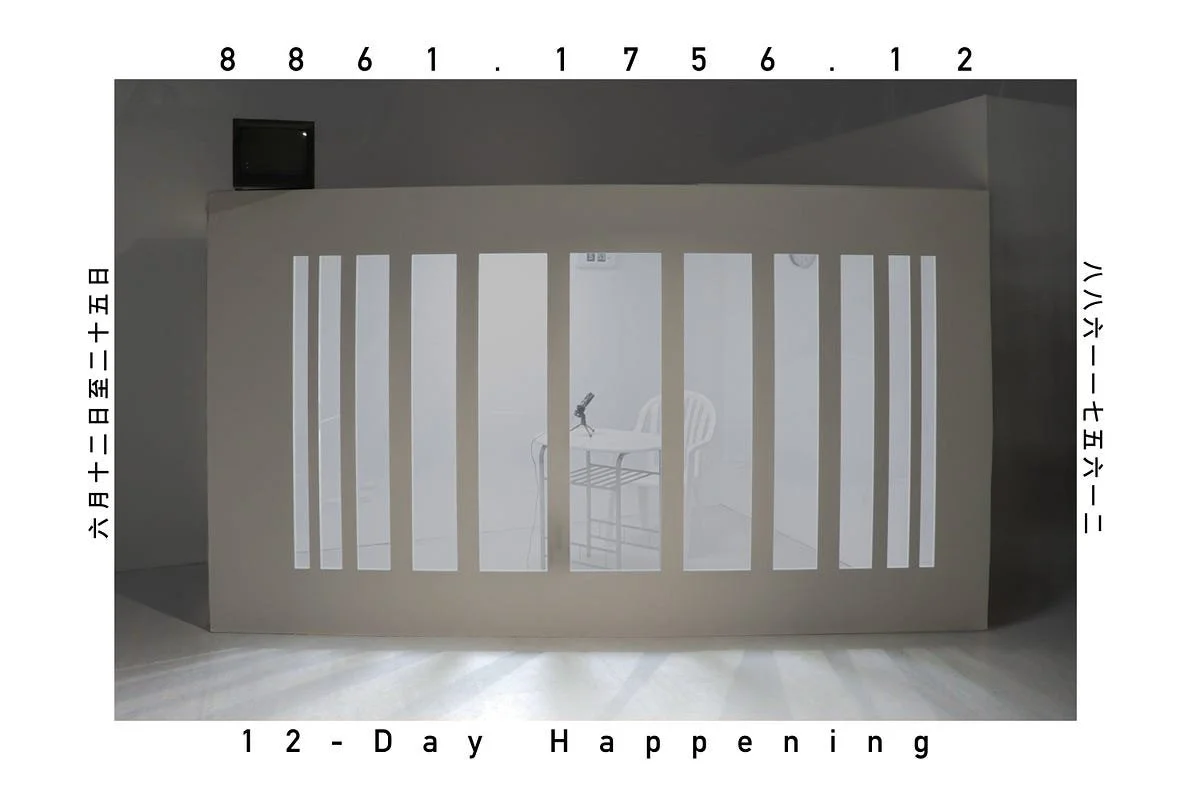
Marco Yuen, 8861.1756.12 (2026) Promotional posterScorching hot sunshine on my untainted skin, inhaling polluted air so humid that made walls sweat; world perceived with half-opened eyes and walked upon with unknowing feet disoriented. I grew up in summers that are very different to ones in England. Summer break didn’t mean rest or holiday, instead a location swap to where I do my homework and studying, not at school but at the comfort of our dining table. Oh how I hated the texture of paper, the smell of rain of the aluminium window frame, and the sound of silence interrupted by rumbling of our poorly-maintained air conditioner. It has been a thousand seven hundred and forty-three days since I breathed the suffocating clouds of Hong Kong. Every now and then someone would ask whether I miss ‘it’, and the fact is, it would be truly dismissive if I give them a straight yes or no. The lack of food options on English soil drives me up the wall, the infamous grey sky seeps into my bones with rigour, not to mention the expensive trains that are always cheekily late. But somehow this dry and gloomy island made my words more powerful than ever, the translated thoughts hold the voice of someone unheard. Being a socially and politically active teenager in China could be named one of the greatest mental tortures anyone could experience. Artist Ai Weiwei had his whole existence erased by the CCP because of his politically outspoken artworks¹; human rights activist and Nobel Peace Prize winner Liu Xiaobo stripped of 11 years of freedom for his advocacy of democratic reformation²; author and filmmaker Zhou Qing imprisoned and harassed by government officials due to his participation in anti-corruption movements³, ones that eventually led to the Tiananmen Square massacre on 4th June 1989. On 4th June 2026, performance artist Sanmu Chen attempted to tie a 6.4-metre-long red thread around a street signpost in remembrance of the lost souls in the massacre, was later stopped and searched by the patrolling undercover officers⁴, as activities that might ‘threaten national security’ was anticipated on the day. Same day in 2023, numerous protestors who were simply holding unlit candles in peaceful demonstrations were detained or arrested, for ‘suspicion of disturbing order in a public place or acting with seditious intent’ under the 2020 National Security Law⁵.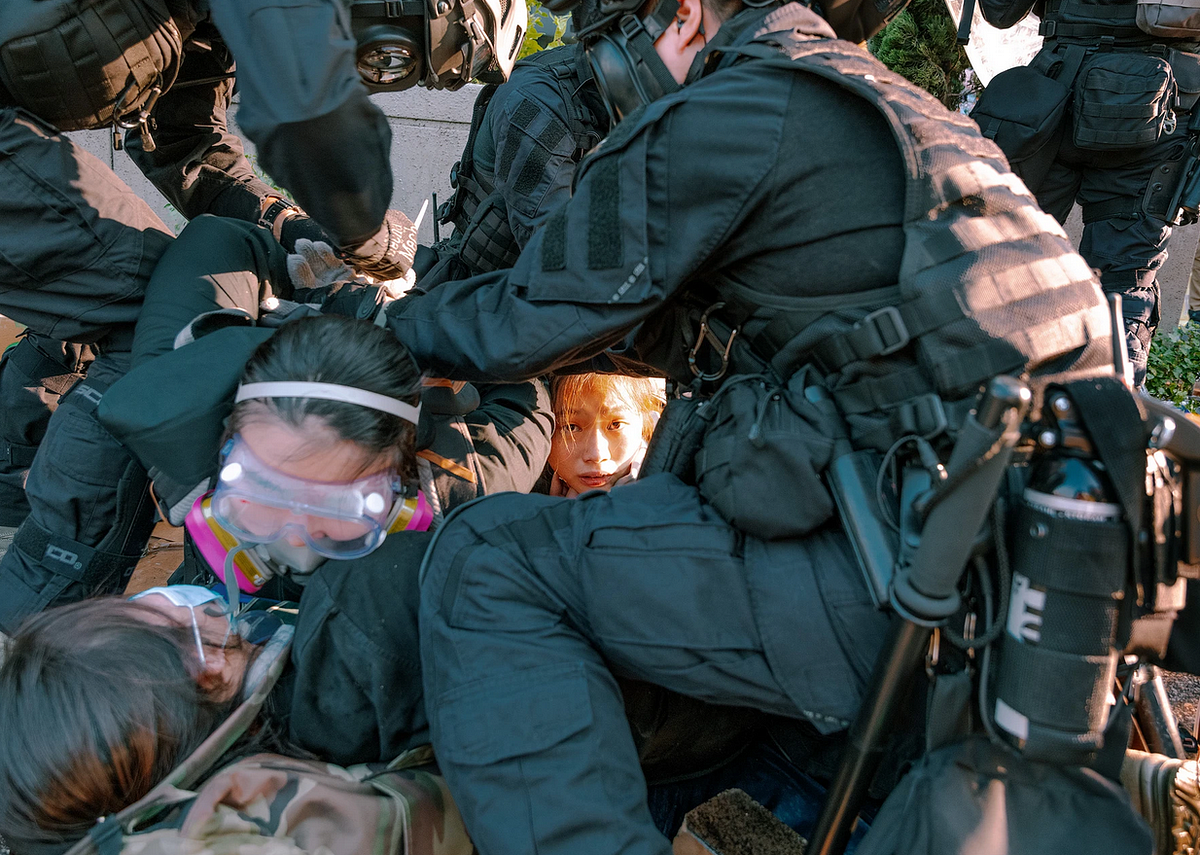
Thaddé Comar, How Was Your Dream? (2022) https://thaddecomar.com/project/how-was-your-dreamNow, what do you think? Do I miss home? I'm still not quite ready to give any answer yet, let's look at the other side of my coin. Reform UK published a 37-page long fiscal analysis of how much it cost to keep legal immigrants in the country, including skilled workers, student and family visa holders, refugees etc (if only their local MPs can spend as much time in their office as they did on this report); percentage of reported hate crime towards Asian that are racially or religiously aggravated is 31.3% from 2023 to 2024, highest of any ethnic group in the UK⁶; Nigel Farage publicly defended the use of Chinese-targeted racial slurs by 2014 UKIP parlimentary candidate Kerry Smith, saying it was 'colloquial' and explained that 'If you and your mates are going out for a Chinese, what would you say you are going for?'⁷.
It is difficult to list how much casual racism my family and I have experienced since living in this country, from shouted slurs to the 'ni haos' with a malicious grin. Surprise, surprise, not all of us speak Mandarin, not that they would care. Hong Kong people are not very vocal; I have known cases where hate crimes went unreported as the victim wanted 'no trouble', very counter-intuitive, I know, 'it's just the way we're wired!'Quick Hong Kong History Lesson — Opium War and Colonisation
Hong Kong, a historically-controversial place where it is wrong to call a city or a country, a British colony from 1841 to 1997 that was also invaded by Japan for 3 years in 1941, hours after the bombing of Pearl Harbour, was later ceded back to China under the agreement that Hong Kong would remain its autonomy for 50 years, with 2047 being the final year of Hong Kong as a separate legal entity from Mainland China. Hong Kong, before British rule, was a sparsely populated array of villages with self-sustaining agricultural industries. This small dot of ink on the world map, 70% the size of London, was greatly desired by the English settlers for its geographical advantages- deep water appropriate as the base for the Royal Navy; also an almost anarchic, independent state that was free from China’s trade restrictions, so that the British can trade opium and tea, some of their main econmic input and output, under the table.
Chinese government didn’t like that. As smoking opium became more and more common, morale of Chinese soldiers dropped, government officials submitted to hedonism, in short, no one was being productive because everyone was constantly high as a kite. Silver was the main currency during the trade relations between China and European merchants. The transaction of opium was first tolerated as the silver paid by Chinese traders was expected to return to the hands of the Chinese in the form of indirect taxes of Chinese goods. More silver in European hands means that they have more currency to purchase Chinese produce. In 1729, Yongzheng Emperor enacted a ban on opium importation and sale. 1838, Daoguang Emperor imposed a stricter prohibition on the trading and usage of opium, including policies like executing peasants who failed to rid themselves of any smoking habit and possession of opium; in addition, neighbours, friends and families of illegal smokers were also executed as accomplices unless the issue was reported to authorities.
What have we learnt from the history of drug bans? Black market and underground sales. British opium traders discreetly imported opium into China, selling this highly addictive substance at extortionary prices. The demand skyrocketed in comparison to the market before the bans. As a result, Chinese silver flew into the pockets of Britons at an exponentially increasing speed. In 1839, Commissioner Lin XeZu was appointed to eradicate any existing opium trade. He sent a highly threatening letter to Queen Victoria, demanding a reflection upon the hypocritical nature of the opium trade, as the substance was banned in Britain, but frequently produced and sold in foreign lands. The letter never reached Queen Victoria for unnamed reasons. Lin then led an operation to destroy 1,016 tons of opium inventory seized from British traders by the banks of the Pearl River at Humen, symbolically declaring war to Great Britain, kickstarting the First Opium War.
1842, the war ended with the Chinese government admitting defeat by signing the Treaty of Nanking, which ceded parts of Hong Kong as a colony to the British Empire. Within the next 56 years, China also signed the Convention of Peking and the Convention for the Extension of Hong Kong Territory; the whole of Hong Kong officially became a crown colony of the British Empire, which would remain for 99 years until 30th June 1997.
Hong Kong developed a weird Stockholm Syndrome with its coloniser, but not entirely unreasonable:The evolution of Hong Kong under British rule was almost scarily steady. The capitalist economic system was introduced, shaping Hong Kong into the financially concentrated, mostly tariff-exempt free market we know today; the British government also gave Hong Kongers their own legal, healthcare, housing and education systems, independent of China's established systems. Into the bargain, traces of British infrastructure can still be found in Hong Kong, including the Mass Transit Railway (MTR), which is ranked one of the best public transport and railway systems internationally⁸, with a 99.9% punctuality rate. With the prosperity Hong Kong witnessed during the colonial period, in comparison to the oppression the people faced under the ruling of Communist China since the 1940s, and the dystopian direction 21st Century Hong Kong is undertaking, it might just be a rational call to be at least reminiscent of the rapid development of our beloved homeland. Most Hongkongers never got educated about why someone might be opposed to being colonised by Britain, no one likes being told that their sweet nectar was blood-tainted. We all need a reminder of the atrocities the British Empire committed during colonial period. The Empire significantly benefited from transatlantic slave trade, materialised exploitations flourished the economy and strengthened the colonial military, dispossession of properties, wealth and technology fueled the imperialistic scheme, but at the expense of robbing the dignity of their colonies. According to scholar Brian Wong (2018), ‘India’s share of the world economy was 23% prior to its colonisation — as large as the rest of Europe altogether; by the time India acquired independence, its share had dropped to less than 4%.’⁹. The damage has been done, and generations have harvested the blood diamond. How many more generations does it take to acknowledge the immorality of missing the ‘good ol’ days’? I will now make an effort to tell you what I miss- the abundance of choices. When tired of the grayscale cityscape, over 70% of the landmass of Hong Kong is covered by mountainous greens¹⁰, a haven for hikers; everyone is born a foodie, delicacies of all cultures can be found within the ease of mere steps; there are so many ways to get to places, underground rail, buses, minibuses, or simply walking. I miss my family, my friends, and the memory of my childhood and adolescence I so dearly grasp onto. I miss that I didn’t have to translate my jokes; I miss that food is cheaper; I miss that I never felt obligated to small talk to strangers; I miss feeling safe at night.I miss not having to worry about leaving.

Marco Yuen, Tung Chung (2021)8861.1756.12 is a project I have kept secret for months during its development stages, partly because I simply enjoy the thrill of not knowing what a gallery has to offer and I wish to deliver that thrill to my peers. And for the second part of the reasoning shall be explained in a more in-depth academic lens.Description of 8861.1756.12:
Throughout the 12-day span of the performance, Yuen reads aloud 11 books covering themes of Hong Kong cultural and political shifts after 2019, Chinese religion and politics, in a room he constructed that has 11 panels of one-way mirrored windows installed. After each day of performance, the windows were then each covered with a strip of print that had designs of Yuen’s Hong Kong personal IDs, including his student card, bank card, medical allergy card, ID card, etc. On the very last day of the performance, whereas all windows were blocked, Yuen spoke to himself for hours before calling his close friend, Marco Chan, in the enclosed space. After their conversation, they opened the handwritten letters that they had written for each other simultaneously, ending the 12-day reading marathon by covering the surveillance camera in the room, which provided live footage of the room throughout to the CRT outside the setting.
If you want to criticise artworks, don't worry, the artist has already done that, harsher and more constant with frustration. Being the first in the family to graduate university, I can't afford a half-assed ending; I had to clock out with a bang. While drafting the initial idea, I planned to lock myself in a room, make self-portraits and poems for the span of the degree show. I hated the idea. I felt disgust towards such an ingenuine final act.Postmodern critiques contributed to the weakened state of artistic intention. The death of the author shifted the attention towards interpretation over authorial intent. This made personal expression a dangerous job. Artists can no longer expect to be judged based on their original intention. It became the artist's responsibility to recognise whether their creation is politically constructive, socially legible, and culturally beneficial.In short, I had to evaluate the purpose of why I wanted to create, and the effect of the assertion of my image.Here comes the eureka moment- the simple presentation of my physical body is the perfect nonmetaphorical representation of my identity group. Peggy Phelan's Unmarked: The Politics of Performance became a focal contextual basis for this piece, Phelan (1993, p. 148)¹¹ claims that 'performance in a strict ontological sense is nonreproductive.' Emphasising the ephemeral nature of a medium which exists entirely based on physical visibility, a performance is only a performance when it is perceived within the happening's time and space, and it 'becomes itself through disappearance' (p.146); it strengthens itself through the invisible realm of memory.I was intrigued by this play of 'visibility'. The core idea of Unmarked is that hyper-visibility does not equal empowerment to the marginalised, as it subjects them to social conventions that were established against the interests of the unheard.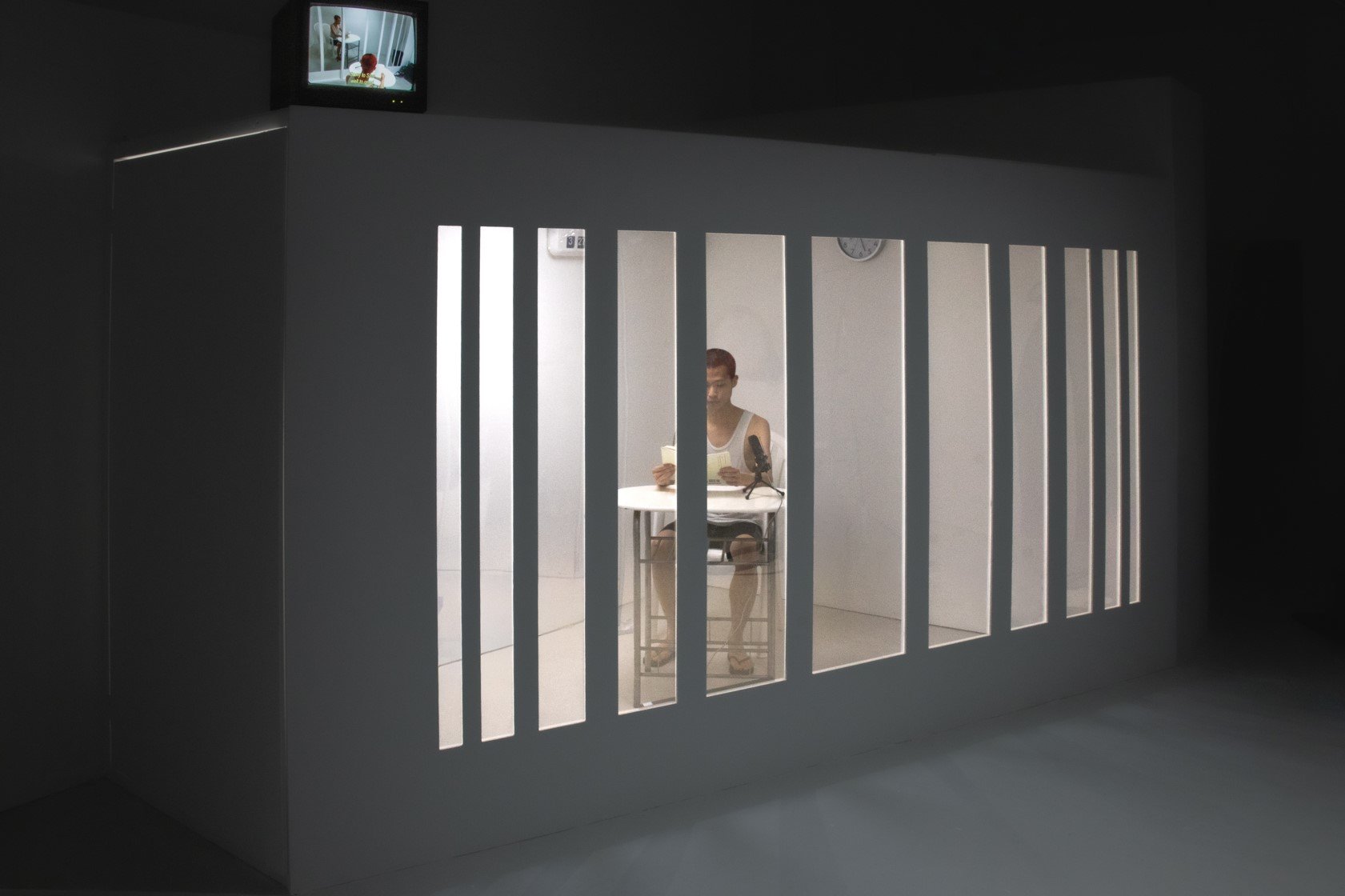
Marco Yuen, 8861.1756.12 (2026) Live performanceWhat if I change the way that the performer is perceived? What if I introduce 'invisibility' within the performance, before and after?
The development of this piece was almost completely 'invisible'. I hid the majority of the experimental and developing processes from my studio colleagues, that's the first invisible. The second invisible: what if I speak a language that no one understands? The encounter with this piece inevitably invokes three stages of perception, as suggested by the title of this text:Look (Impression) - Uninformed visitors to a degree show, though, often expect something vulgar and progressive; an exhibited living body still strikes unprepared eyes. How do you act in front of a movie? How comfortable do you get in a concert? If the gaze of the performer influences the audience's behaviour, does the gaze of the audience affect how the performer manoeuvres his actions? A sitting figure speaking in a foreign language, how do visitors confront this 'oddity' that they barely know of?Watch (Interaction) - Upon understanding that the windows the performer was situated behind were one-way reflective, the viewer quickly understands the isolated nature of this reading chamber. The highlight of this piece would be the CRT sat atop the room's corner, providing live footage of the room, and the old-school-cinema-subtitle-style live translation of the Cantonese reading below. This began the second layer of perception, as the spectator makes the connection between my speech and the changing subtitle, one can only imagine the artist wanted the visitors to understand his language through a translation system.But the tricky thing is, once you've spent 10–15 seconds trying to comprehend the English 'translation', you realise nothing really makes sense. With an incomprehensible language being the initial perception of the artwork, one would only assume that the shown transcript would provide context as to what the performer is trying to say. But the longer you read, the more confusing it gets.See (Comprehension)- At an art school degree show, I would only expect a selected few to get to this stage of perception. It is destined that most of the audience of this piece wouldn't be able to understand both my speech and the nonsensical translation, which was programmed to translate my speech with little to no context awareness. This should be when the realisation kicks in: the performed act was never the main character, but the performer's helplessness of not being understood despite the exhausted effort of making himself visible.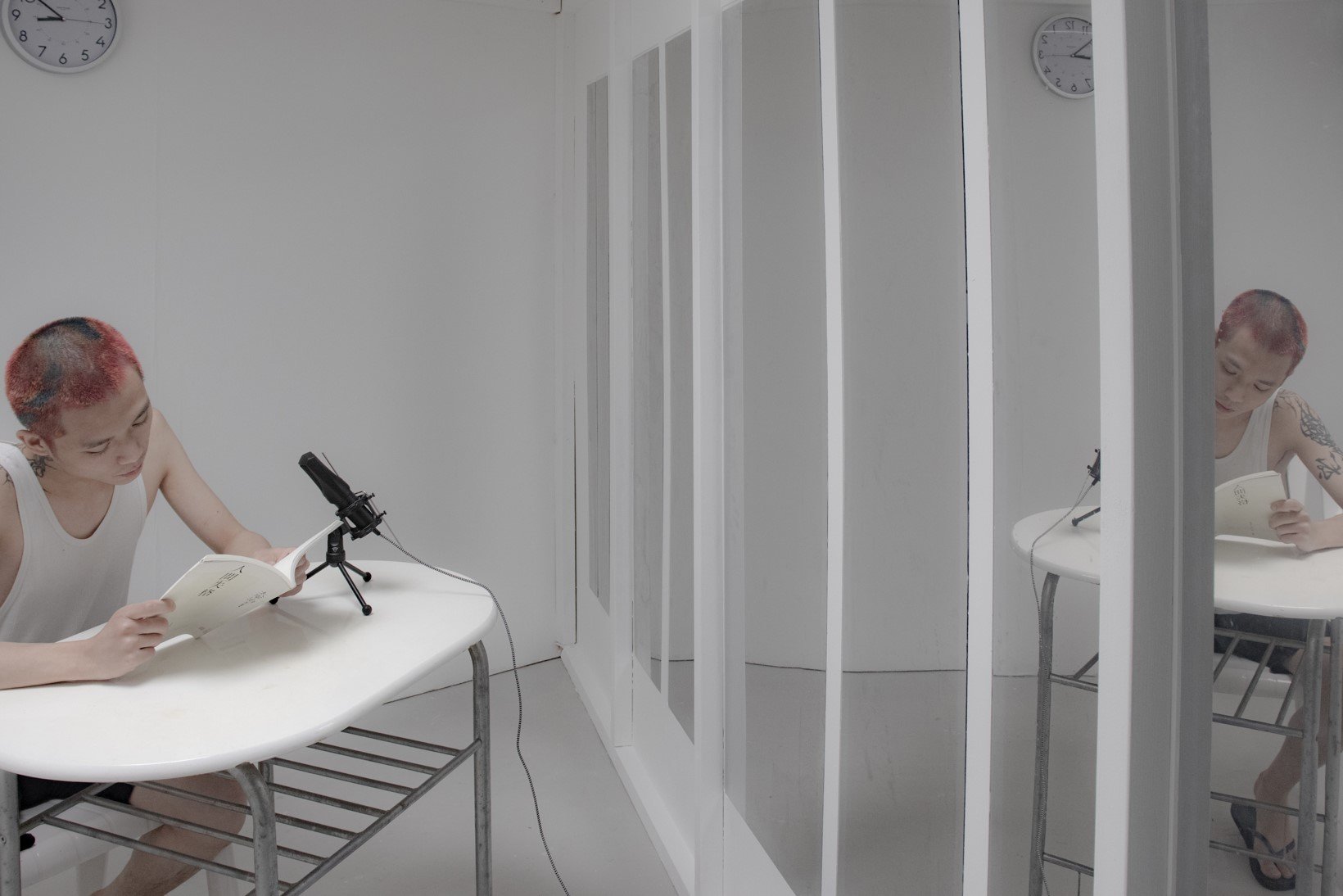
Marco Yuen, 8861.1756.12 (2026) Live performanceWhile I was in my own echo chamber, I felt more vulnerable than I ever was. People outside of the room speculate whether the performer can hear their conversations, and an additional sense of empowerment was granted to the viewer as soon as they realised they were the invisible one to my side. I have heard words that made me uncomfortable, or people who felt the need to put their hands on the walls and windows. No one was brave enough to do that in an opera house, but the vulnerability I presented myself in allowed outsiders to get away with virtually anything. Did you like seeing your own reflection on the windows that separated you and me?Towards the end of the performance, the content of it became less metaphorical and more literal. I found increasing comfort the more I covered the windows, as I received occasional harassment during the performance. As I was reading texts about the writers' memories of dead friends and families, painful experiences of protests, or emotional outcry for their longings, I heard mocking; I was spooked because people thought it was ok to bang on the windows just because I was performing for them. The physical boundary I constructed with compressed wood amplified the relation between the coloniser and the colonised. By exposing my vulnerability, I did not demand to be heard, but to force the viewer to take a good look at themselves, judging whether they were complicit in the silencing of marginalised groups. You might not have caught my words, but you must understand why I speak.It was virtually impossible to understand what I had been saying during the happening. I physically exhausted myself in the span of 12 days, trying to tell you about how I felt living in this country for 1756 days, within my fleeting life of 8861 days on 25th June 2026. Just because you couldn't understand my words doesn't mean I am less of a person. If you couldn't judge the book from reading it for 10 seconds, how could you judge a person for the mere time they spent around you? Immigrants had a life before they immigrated; no one knows how smart or funny they were in their own tongues; we want to be presented, but our voices were silenced before they were even spoken. Treat people with dignity; we all live lives that remain unseen by the common eye.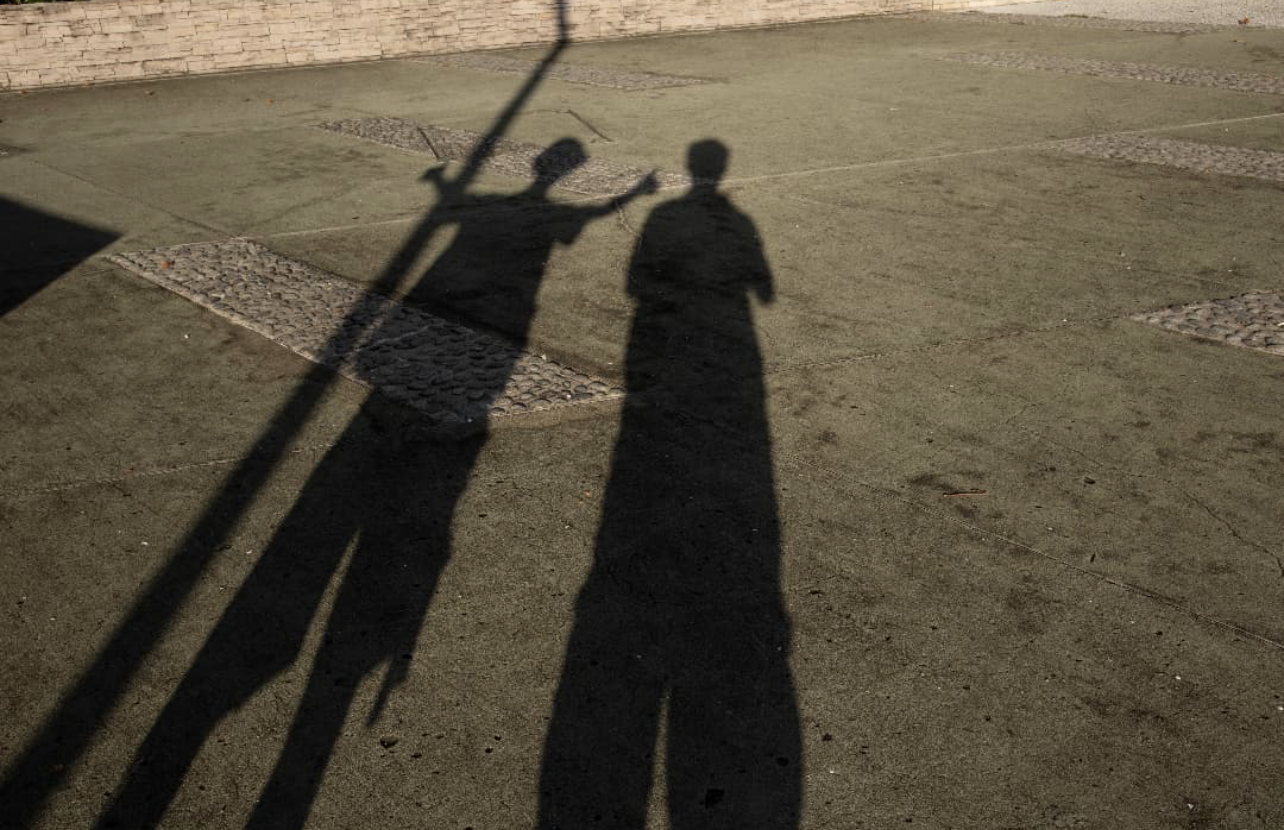
For the closing act, I invited my friend Marco Chan for a call, a time zone difference of 7 hours, over 5,880 miles apart. After the call concluded, we read the handwritten letters we sent to each other ahead of time, at the end, the surveillance camera was covered with the letter, ending the 12-day happening. Most people still wouldn't understand the speeches, but let this be a gentle reminder that: immigrants never leave a better life to seek a worse one.Think beyond given.¹ Bach, P. (2026). Megaphones Made of Silence: Ai Weiwei at Odds With Power. https://www.counterpunch.org/2026/02/11/megaphones-made-of-silence-ai-weiwei-at-odds-with-power/
² Haas, B. (2017). Nobel laureate Liu Xiaobo released from Chinese prison with late-stage cancer. https://www.theguardian.com/world/2017/jun/26/nobel-laureate-liu-xiaobo-released-from-chinese-prison-after-cancer-diagnosis
³ Peschel, S. (2019). Tiananmen Square Massacre 30 years on. https://www.dw.com/en/tiananmen-square-massacre-where-does-china-stand-30-years-on/a-49019228
⁴ Li, Y. (2026). Hong Kong artist who tried to mark Tiananmen massacre intercepted by police. https://www.theguardian.com/world/2026/jun/04/hong-kong-artist-tiananmen-square-massacre-tribute-intercepted-by-police
⁵ Yip, M. (2023). Tiananmen Square: Hong Kong police detain activists on anniversary of massacre. https://www.bbc.co.uk/news/world-asia-china-65803053
⁶ Gov.uk. (2025) Victims of racial and religious hate crime. https://www.ethnicity-facts-figures.service.gov.uk/crime-justice-and-the-law/crime-and-reoffending/victims-of-racial-and-religious-hate-crime/latest/
⁷ BBC News. (2014). Farage defends 'rough diamond' former UKIP candidate. https://www.bbc.co.uk/news/uk-politics-30546515
⁸ Wong, M. (2015). Hong Kong's MTR: Taking a ride on the world's most envied metro system. https://edition.cnn.com/travel/article/hong-kong-mtr-success-story
⁹ Wong, B. (2018). On the Legacy of the British Empire: The Dangers of Romanticising An Incomplete Past in Hong Kong Politics. https://kwokscholars.org/blog/dangers-of-romanticising-history.html
¹⁰ The Green Earth. (2024) Leave No Trace: Hong Kong's Countryside and Natural Resources. https://greenearth.org.hk/naturetrails/en/leavenotrace/ournature/
¹¹ Phelan, P. (1993) Unmarked: The Politics of Performances.ISBN: 0–415–06822–3